CHIEFS.
Chiefs is a visual documentary project exploring the creative resilience of women and girls from & within the West African diaspora. It was born out of the necessity for community beyond borders and a space to communicate, cross-examine and express shared, collective and individual experiences.
Chiefs is born out of the belief that there is strength in numbers, and this applies beyond the constraints of location, class, or even language. Chiefs is inspired by the oldest ‘freedom fighter’ in the world, the modern woman, challenging the idea that new, nuanced or innovative ideas within intersectional feminism are too radical. Chiefs comes at a time when women are being compared against each other in physical, spiritual, and digital realms and beyond, and builds from the director Betty’s personal experience as a mixed black Nigerian woman living and working in London, UK.
Sodade Next is the starting point for this series. It is a short-form documentary depicting girlhood amongst emerging musicians on the islands of Cape Verde, West Africa. Containing interviews and visuals that connect the land and cultural context to talent, femininity, and boldness, it aims to express shared experiences of trying and failing, succeeding, and fierce resourcefulness and creativity.
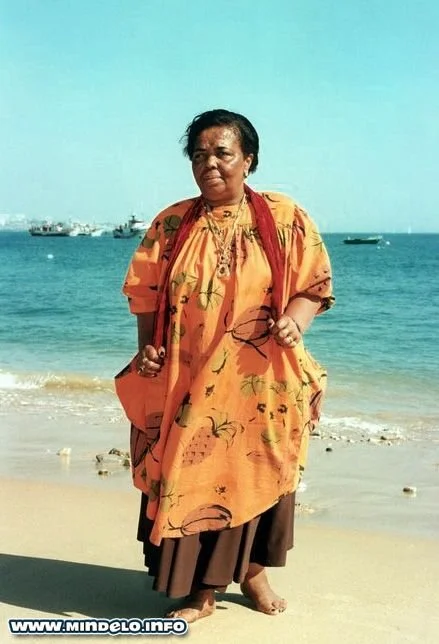
Sodade Next is about the emerging musicians living and working on the islands of Sal, Santiago, and Santo Antão, following in the legacy of one of the most famous Afro-folk singers to date, Cesária Evora. Music is a huge part of Caboverdian culture, but this is not reflected as proportionately in wider Western media.
STARTING POINTS

I’m a multidisciplinary artist working across painting, textile, installation and lens-based media and spent five years documenting Black British nightlife around London and greater parts of England. Being around these spaces routinely taught me the importance and significance music has in the diaspora, and as a Brit with West African heritage, I was able to connect with people through these events.
Diaspora nightlife in the UK isn’t just a series of parties, it became a third space, a chance to express and to feel at home with the music played at home too.
For many of us in the Diaspora, and those of us with mixed heritage, it’s the space to grieve, be heard, to express and to love, to accept and to be accepted.
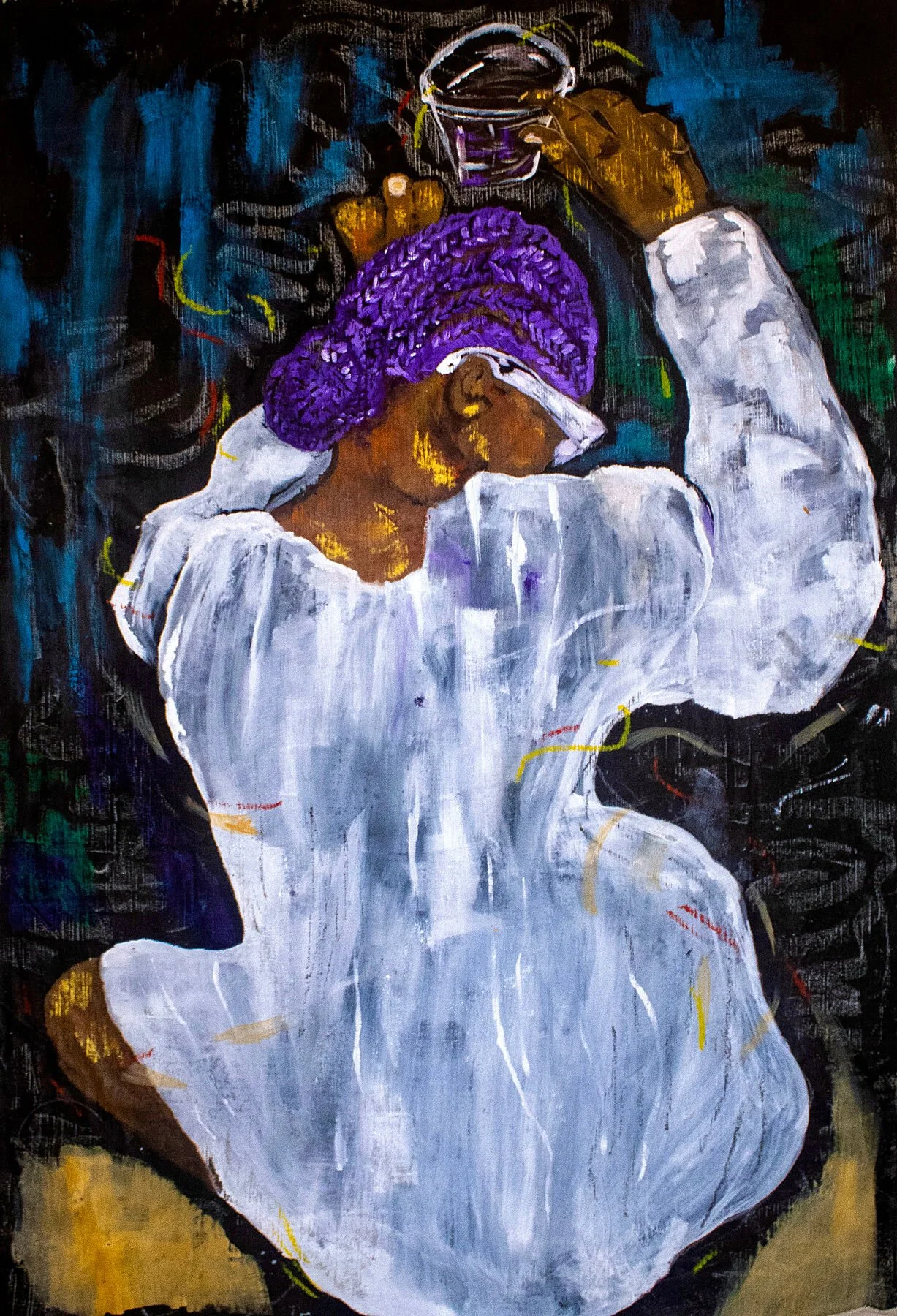
Working with musicians and in nightlife spurred me on to this project. My wider practice explores visual narratives of women over time and how I can show femininity and empowerment. My most recent exhibition, LOVE/FIGHT, was my manifesto of this continuous practice - I’m exploring ideas around what it means to be a resilient woman, and how in some contexts, this can be seen as political. Below are works I made that are now visual references for starting points in this series.
MY WORK
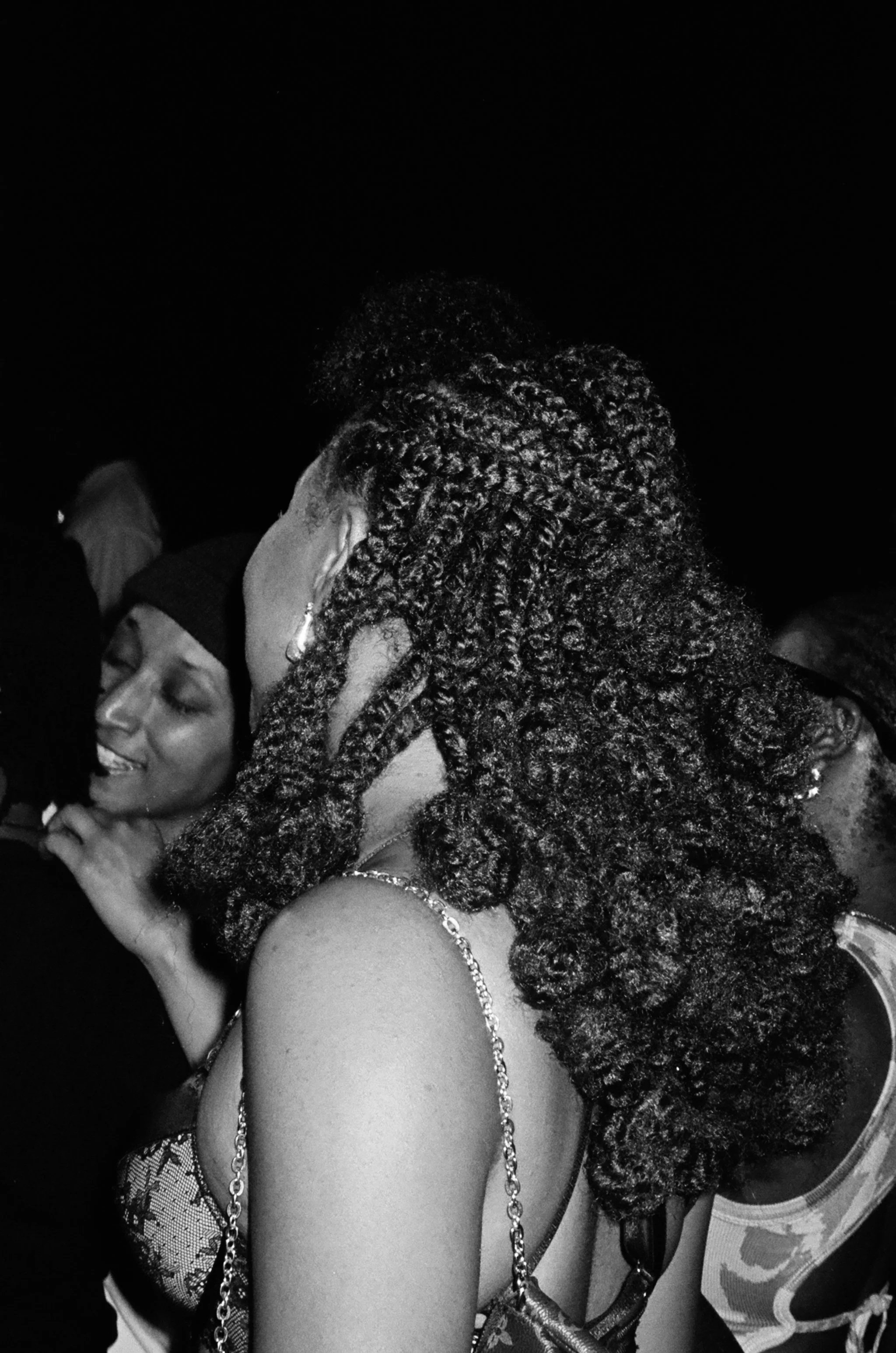
Working for events, it was always about capturing love, enjoyment and connection for me. I started going to raves and parties in 2017 and taking photos of people’s outfits and moments when they expressed themselves. I’d reflect on my composition choices in the dark rooms when I developed the images.
This led me to my love of colour, seeing expressions of culture through fashion completed by pops of colour.
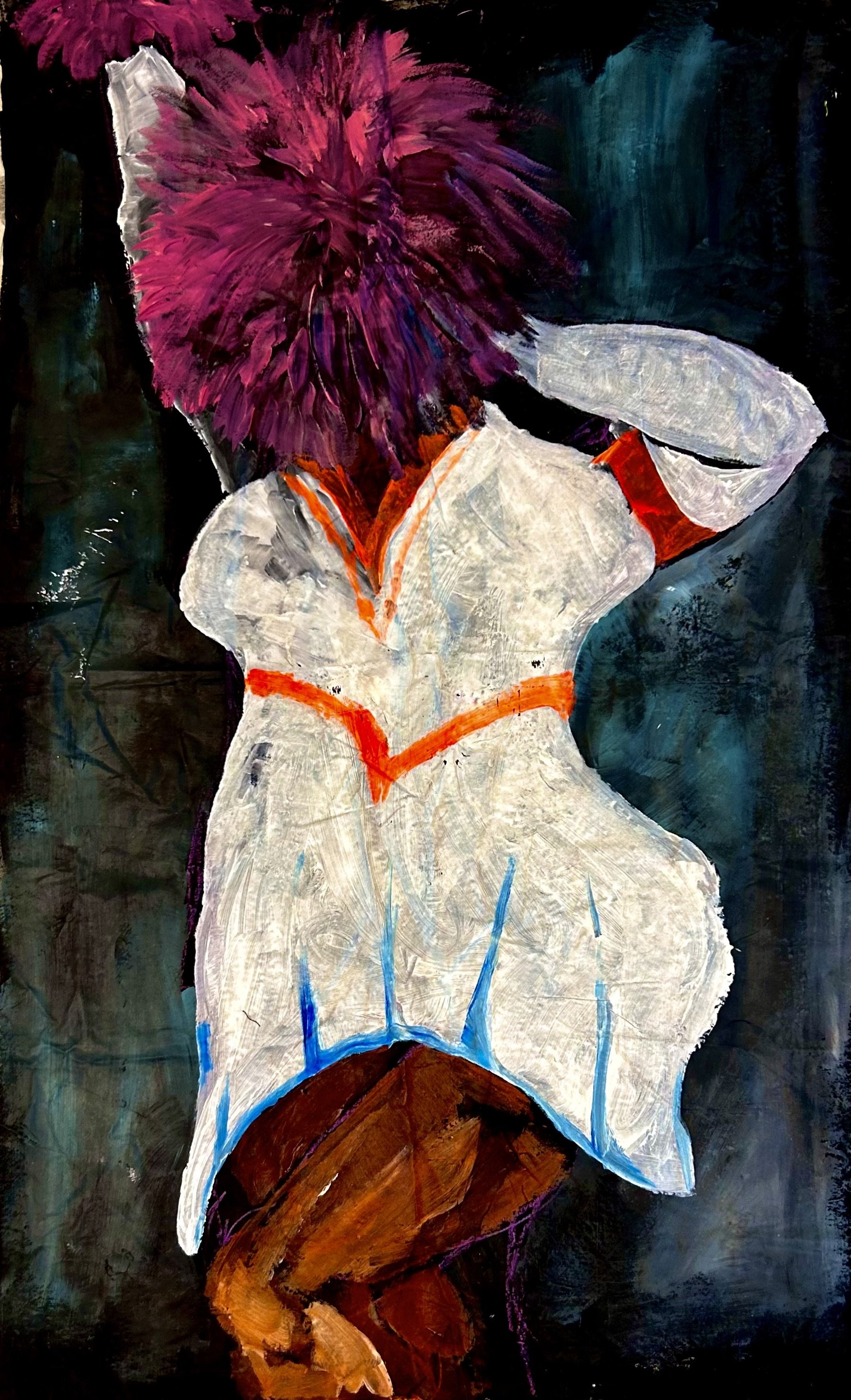
And then there was the narrative. I started painting subjects that I wanted viewers like me to relate to and or feel empowered by. I paint from imagination, a series of female figures inspired by resilience, expression and taking up space. This is the spirit I want to channel with real subjects in this docuseries. I paint from the heart and experiences so in many ways subjects are imagined as extensions of myself, because I can only speak for myself.
SODADE NEXT
MUSIC, HERITAGE & CESARIA EVORA
The bridge between my work, my experience and this project is music. I’ve created work imagining an alternative perception of women and girls, one that champions resilience and empowers us.
My father, who has integrated with much of Portuguese culture, raised me communicating the parallels that my mixed heritage has with nations of a widely mixed population. His music taste bled into this and I was brought up hearing a lot of Cesaria Evora. The legacy of the barefoot diva runs strongly through these islands and she is arguably the most famous Cape Verdian in mainstream media and contemporary culture. I want to build on this highlighting and celebrating the talented musicians emerging from the islands currently, through my fieldwork of research.
The story
West African culture, music and creative output are not monolithic. In Cabo Verde, many talents exist on the islands that seldom reach mainstream media. And in mainstream media, music from West African talents are often highlighted from predominantly Nigeria and Ghana. As music in the Western world evolves, genre-bending artists from Gen Z around the globe are gaining more traction, traditional cultural artists’ works are being sampled, and these aspects of contemporary African culture are starting to become part of Western culture. Three female artists, on the islands of Santiago, Sal and São Nicolau, will be followed by me as we display their lifestyle, girlhood, sisterhood and creative resilience as they navigate their individual music scenes within their rich cultures.
Sodade Next is a celebratory poetic documentary. It’s the world according to emerging passionate musicians. The world according to an overlooked demographic, women who work hard, women who are resourceful, creative and resilient. Visual language showing heritage, performance and tenderness in womanhood are the main elements.
CREW
DIRECTOR: BETTY OGUNDIPE
CULTURAL CONSULTANT: JAMILA LEAL FERNANDES
SOUND ENGINEER: AMIRAH DE BOURG
PRODUCTION CO-ORDINATOR: KENNY OKODELE
PLUS 3 TALENTS
INTERVIEW QUESTIONS BELOW; TRANSLATIONS IN PT AND KR
1. What is your favourite thing to do on this island?
Português:
Qual é a tua atividade favorita nesta ilha?
Kriolu:
Kusé bu kusa preferidu pa faze na es ilha?
2. What is the biggest milestone in your time making music so far?
Português:
Qual foi o maior marco na tua trajetória musical até agora?
Kriolu:
Kusé foi kel maior marku na bu kaminhu na músika ti agora?
3. What are the three most important things to you?
Português:
Quais são as três coisas mais importantes para ti?
Kriolu:
Kusé ki são tres kusa mas importanti pa bo?
4. When you win a Grammy, who will you thank first?
Português:
Quando ganhares um Grammy, a quem vais agradecer primeiro?
Kriolu:
Ora ki bu ganha un Grammy, kenha bu ta agradese primeru?
5. How much time do you spend doing this?
Português:
Quanto tempo dedicas a isto?
Kriolu:
Kantu tempu bu ta gasta na es kusa?
6. What do you do aside from this? Take care of yourself, your family, do you have a job in a different field entirely?
Português:
O que fazes para além disto? Cuidas de ti, da tua família? Tens um trabalho noutra área completamente diferente?
Kriolu:
Kusé ki bu ta faze além di es? Bu ta trata di bo kabesa i di bu família? Bu ten trabadju na otu área diferente?
7. If not this, what would you do?
Português:
Se não fosse isto, o que farias?
Kriolu:
Si ka era es, kusé ki bu ta faze?
8. When problems exist, what do you do?
Português:
Quando surgem problemas, o que fazes?
Kriolu:
Ora ki ten problema, kusé ki bu ta faze?
storyboard